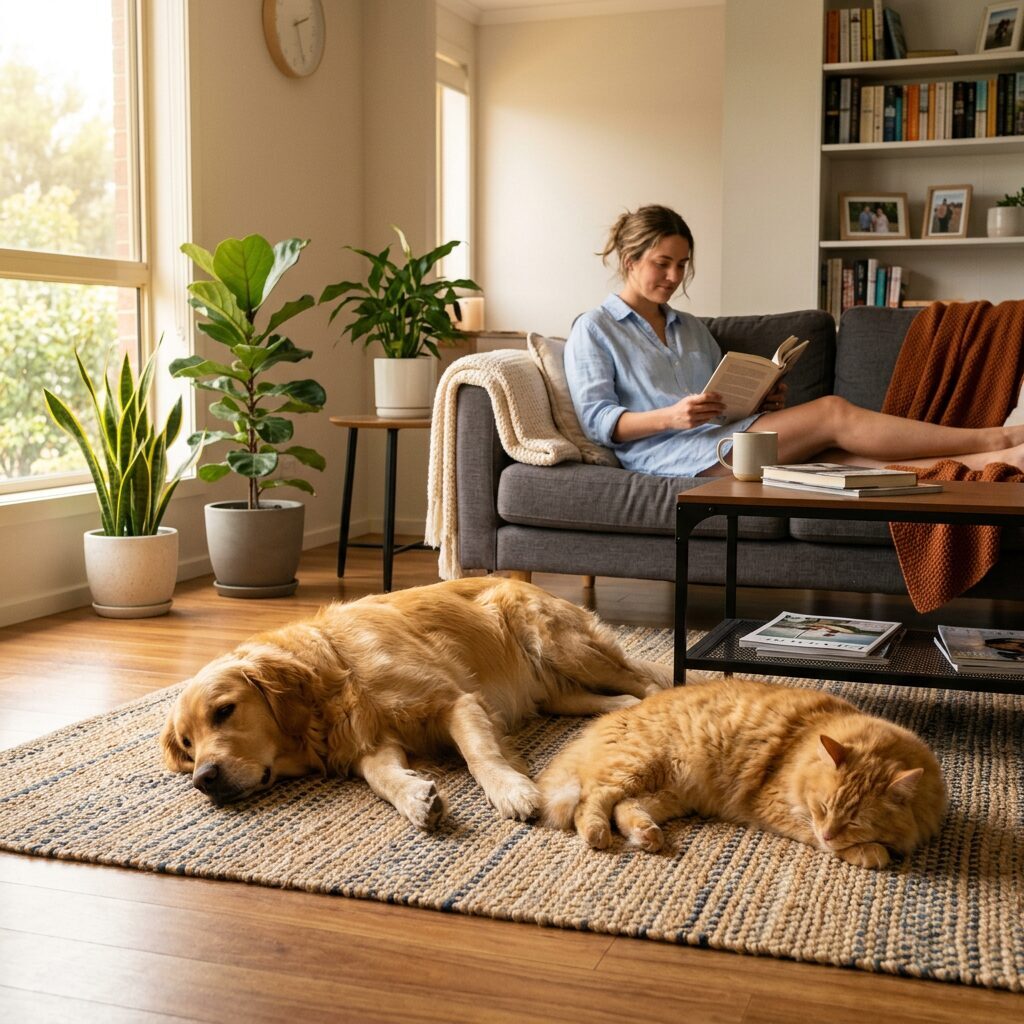
Pet owners know the truth. The home doesn’t just get lived in; it gets tested. Scratches on floors, fur on every surface, lingering odors, and the occasional mystery stain can make cleaning feel endless. The biggest challenge is that much of the damage goes unnoticed until it becomes costly or stressful to repair. A smarter approach to pet-friendly home maintenance. You can keep your home clean, comfortable, and durable, without sacrificing the joy of sharing it with your pets.
Quick Key Takeaways
- Choose pet-friendly flooring that stands up to scratches, spills, and daily wear.
- Protect furniture with washable covers and consistent habits that prevent claw marks and stains.
- Maintain indoor air quality for pet owners by staying on top of hair, dander, and filter changes.
- Inspect and repair fences regularly to prevent escapes and keep outdoor spaces pet-safe.
- Store foods, cleaners, and medications in pet-proof spaces to avoid accidents before they happen.
How a Home Warranty Helps Pet Owners Handle Unexpected Repairs
Even with a solid weekly routine, the biggest stress for pet owners is often the breakdown you didn’t see coming. Heavy pet traffic puts extra wear on major home systems. Especially HVAC units that quietly collect pet hair and dander until airflow drops and efficiency suffers. A home warranty can add real peace of mind for pet owners. By helping cover the cost of unexpected repairs to major systems and appliances before they blow the budget.
Home warranties are customizable. Annual service plans that cover the repair or replacement of major home systems and appliances. Optional add-ons to help manage costs from normal wear and tear. To see what coverage options look like for your situation, give this page a visit.
6 Smart Ways to Pet-Proof Your Home
Pet-proofing your home doesn’t require a full renovation. It’s a set of small, repeatable habits that prevent damage and keep your space comfortable for everyone. Pair these upgrades with the protection of a home warranty. You handle routine maintenance, and you’re better prepared when an unexpected system breakdown occurs.
- Choose pet-friendly flooring for high-traffic zones. Put your toughest surfaces in the “high-traffic pet loop” — entry, kitchen path, litter box area, back door. Tile handles claws and accidents well. Quality vinyl is softer underfoot and easier to replace section by section if one area gets gouged. Add washable runners at turns and doorways so you’re laundering a rug, not scrubbing grout, after muddy paws come in.
- Protect furniture with washable, stay-put covers. Use machine-washable furniture covers that fit securely over cushions. Or fasten with straps to prevent slipping when your dog jumps onto the couch. If possible, keep two sets.One on the furniture and one clean in the closet for quick changes before guests arrive. If shedding is your biggest challenge. Choose neutral colors that help hide pet hair and keep your home looking cleaner between washings.
- Set an air filter routine that actually improves indoor air quality for pet owners. Pick one filter day each month and inspect your HVAC filter. Replace it when it looks gray or loaded — or at least every 60 to 90 days in most pet homes. If you have multiple pets, allergies, or heavy shedding seasons, check every 30 days. Ensure airflow stays strong and pet odors don’t settle in. Write the install date on the filter frame so you’re never guessing when it’s due.
- Inspect fences and gates like the safety equipment they are. Walk your fence line weekly for five minutes, especially after storms. Focus on loose boards, sharp edges, gaps at corners, and sagging sections near gates. These are the most common failure points. To keep your yard truly pet-safe, avoid shortcuts during gate installation and repairs. Use proper posts, level hinges, and latches that your pet can’t nose open. Keep a small patch kit on hand — fasteners, wire ties, a spare latch — so minor fixes don’t become escape routes.
- Use a two-barrier rule for pet-safe chemical and medication storage. Store cleaners, pest products, automotive fluids, and medications behind two barriers. A latched cabinet inside a closed laundry room, for example. Use original containers, avoid decanting products into food-like bottles. Add a childproof latch if your pet can paw doors open. Replacing a broken latch is a minor cost; an emergency vet visit is not.
- Install and seal pet doors carefully. Choose a model sized for your pet’s adult dimensions and install it in a low-risk location with clear sightlines. An exterior door rather than a wall usually makes weather sealing simpler. Add a locking panel for nighttime and deliveries. Train a “wait” cue so the door doesn’t turn into a frantic in-and-out loop. Check the flap seal each season, since a worn gasket invites drafts. Moisture, and odors that can undermine the indoor air quality you’ve worked to protect.
When you combine durable pet-friendly surfaces, predictable maintenance routines, and secure storage habits. The most common pet headaches — dander, odors, scratches, and safety concerns — become much easier to manage day by day.
Pet-Friendly Home FAQs
Q: How do I reduce pet dander without deep-cleaning constantly?
A: Start with a weekly soft-surface reset: wash throw blankets, vacuum upholstery, and lint-roll your pet’s favorite nap spots. Use a vacuum with a sealed HEPA system and brush pets outdoors whenever possible. The EPA notes that animal dander is one of the most common biological contaminants in indoor spaces, so consistent removal beats occasional marathon cleaning every time.
Q: What is the safest way to store cleaners and medications around pets?
A: Keep products in their original containers and store them behind two barriers — a latched cabinet inside a closed room. Avoid open buckets, low shelves, and temporary countertop storage. If your pet can open doors, add a childproof latch as a second layer of protection.
Q: Why does my house still smell like pets even after I clean?
A: Pet odors often linger in fabrics and in the air itself, not just on hard floors. Improve airflow, replace HVAC filters on schedule. Run an appropriately sized air purifier in rooms where your pets spend the most time. It helps to know that indoor air pollution levels can be 2-5 times higher than outdoor air. Especially in homes with multiple pets.
Q: How often should I replace my HVAC filter with pets in the house?
A: Check it monthly. Replace it if it looks gray or fuzzy, airflow decreases, or odors increase. Homes with multiple pets or allergy sufferers often do best with 30 to 60-day changes. Writing the date on the filter frame means you never have to guess.
Q: Can I prevent scratches and stains without banning pets from furniture?
A: Yes. Use washable covers. Keep nails trimmed regularly. Offer a more appealing “yes spot” like a cozy pet bed placed right beside the couch. For cats, position a scratching post near the furniture edge they target most and reward them immediately for using it. Redirection works better than restriction.
Build Small Daily Habits for a Safer, Cleaner Pet-Friendly Home
Living with pets is a joy, but it also means dealing with dander, curious noses, and everyday wear and tear. The best approach is to be proactive. Make pet-proofing part of your routine instead of waiting for problems to happen. This helps keep pets safe, reduces cleanup, and makes your home more comfortable. For both two-legged and four-legged family members. Pick three changes from this article, put them on your household calendar this week, and build from there.